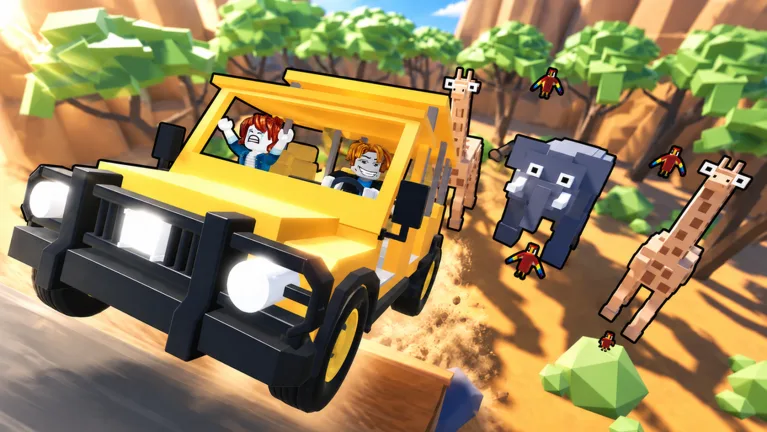
Film Animals Safari At Night Guide: Surviving Late-Game Chases
Discover how to master film animals safari at night in Roblox. Learn wrap times, bus upgrade priorities, and chase survival strategies to convert footage.
Published: Film Animals Wiki Editorial Team
Table of Contents
Why Nightfall Destroys Safari Runs
In the Roblox experience Film Animals, developed by ChrisBacker1993, nightfall is never just atmospheric flavor text. The core safari loop demands aggressive filming followed by a prompt return before the sun goes down. According to community reports from veteran players, most failed sessions do not stem from poor camera work or bad angles. Instead, they result from late exits, damaged transport vehicles, and crews arguing over one final tiger shot while the clock runs out.
Staying out past dark introduces severe gameplay penalties. Chase sequences interrupt valuable conversion plans, putting your hard-earned clips at risk. Furthermore, aggressive nocturnal wildlife inflicts heavy damage on your car or bus. Passenger danger escalates rapidly, turning a profitable, high-quota outing into a complete party wipe. Even if you gathered legendary footage, lost time prevents you from meeting your operational quotas at camp. Treat your departure deadline like a strict production wrap time on a professional film set. When wrap is called, your crew must head back.
Warning
Greedy Overtime: Staying out for "one more tiger angle" is the leading cause of late-game squad wipes. Prioritize survival and conversion over risky framing in the dark.
Building a Personal Wrap Clock
Successful safari teams never guess when it is time to leave. Before each departure into the wilderness, establish a rigid personal wrap clock with your crew. This system prevents individual players from getting distracted by high-value animal sightings when light conditions deteriorate.
Last New Setup: Mark the exact moment after which your team stops hunting for fresh framing opportunities and only finishes the current shot in progress.
Mandatory Turnaround: Set a hard time when your vehicle's wheels must point back toward camp, regardless of what rare animal crosses your path.
Emergency Sprint: Define the final boundary where, if you are still outside, you must drop all filming equipment entirely and drive flat-out for safety.
Solo players must configure these time marks much earlier than a coordinated five-person crew operating a fully repaired bus. While investing in Bus Upgrades provides better speed and handling, these mechanical improvements buy precious seconds rather than granting absolute immortality against persistent predators like the tiger or buffalo.
Route Planning for Safe Returns
A successful night survival strategy begins before you even leave the safety of camp. Community guides emphasize the importance of structured navigation when daylight begins to fade.
Plan Dual Paths: Always leave camp with a known outbound path and a clear, unobstructed inbound path for your return trip.
Avoid Dead Ends: Steer clear of complex landmark detours and scenic dead-ends when the ambient light is already dropping.
Conserve Fuel and Focus: Do not exhaust your crew's attention or vehicle fuel on optional side objectives or treasure hunting when night approaches.
Distance Callouts: Appoint spotters whose primary job is calling out distance-to-camp estimates rather than just spotting distant wildlife.
If your group repeatedly loses its way in the dark, simplify your expeditions. A shorter, reliable buffalo photography route that always converts safely beats a winding, ambitious tiger pilgrimage that strands your team out in the wilderness at dusk.
Managing Passenger Safety and Vehicle Integrity
The core gameplay loop explicitly requires keeping all passengers safe. Surviving the night is just as much a people management challenge as it is a driving challenge. When panic sets in, teams often fracture, leaving vulnerable members behind.
Never leave players stranded on foot while the transport vehicle is rolling back toward camp.
Assign a dedicated crew member to watch player health states and call for immediate heal or revive assistance.
Cease all optional stunt driving or funny framing once the official wrap call has been made.
Prioritize immediate vehicle repair windows if the bus takes critical damage before picking another fight with aggressive fauna.
Passenger wipes during active nocturnal chases are the primary way high-value footage evaporates into nothing. Treat your fellow players as essential cargo that you refuse to abandon under any circumstances.
Adapting Your Mindset During Nocturnal Chases
When an aggressive animal forces your team into a chase scenario, your operational goals must shift instantly from artistic creation to survival preservation.
Break Contact: Actively maneuver to break line-of-sight and contact with attacking animals whenever terrain permits.
Protect the Bus: A disabled vehicle stranded in the dark functions as a magnet for complete mission failure.
Reunite the Crew: Ensure all players are safely loaded onto the vehicle; split runners are easily picked apart by predators.
Drive for Camp: Prioritize the fastest route back to safety rather than attempting to capture revenge clips or action shots.
Convert Later: Remember that only surviving footage successfully converted at camp actually contributes to your progress.
Zebra and tiger encounters demand deep respect during daylight hours so that your vehicle does not enter the night cycle already bleeding health and resources.
Essential Driver and Spotter Callouts
During high-pressure escape scenarios, verbal communication can make the difference between survival and disaster. Crews that waste time with lengthy, unorganized sentences during a panic will lose vital seconds. Keep your terminology concise and standardized across all team members:
“Wrap”: Execute a mandatory turnaround toward camp immediately.
“Soft Wrap”: Finish the current camera take only, then head back.
“Bus Critical”: Cease looking for new animals; focus entirely on vehicle repair or strategic retreat.
“Passenger Down”: Stop filming instantly and initiate recovery protocols for fallen teammates.
“Chase”: Abandon all current setups and execute the pre-planned escape route.
Upgrading Your Bus for Night Survival
As you accumulate earnings from successful expeditions, prioritize spending your currency on upgrades that shorten and harden the return trip. Night survival is the primary reason why survivability metrics should always outrank purely cosmetic modifications.
Repair Capacity and Durability
Enhancing your vehicle's structural durability ensures that a single unexpected hit from a predator does not instantly strip away your mobility in the dark.
Speed and Handling
Upgrading engine power and steering response makes the inbound journey realistic and manageable under intense chase pressure from fast predators.
Support Gear
Investing in equipment that supports faster healing and revival mechanics keeps your crew operational if an unexpected encounter goes poorly.
Solo Versus Party Night Rules
The dynamics of night survival change drastically depending on your group size. Adjust your operational rules to match your crew composition:
Solo Players: Turn around significantly earlier than groups. Because you cannot drive, film, and self-recover simultaneously, lean toward lower-risk buffalo routes and early conversion cycles.
Duo Teams: The driver owns the operational clock, while the camera operator owns the cut call. If either person calls for a wrap, the team must comply immediately.
3–5 Player Crews: While extra eyes help spot wildlife, larger groups often suffer from delayed decision-making. Appoint one single wrap authority before departing camp to eliminate arguments during critical moments.
Frequently Asked Questions
What causes most night failures in Film Animals?
Most night disasters stem from filming greed, such as attempting to capture one final tiger angle or zebra shot after light levels have already dropped, leading to late exits and damaged buses.
How do I handle a passenger down during a chase?
Stop filming immediately, secure the vehicle or provide cover, and execute rescue protocols. Abandoning a downed teammate during a nocturnal chase usually results in a complete wipe.
Should I prioritize cosmetic bus upgrades or durability?
You should always prioritize durability, repair capacity, and speed upgrades. Surviving late-game chases and securing your footage depends entirely on vehicle performance under pressure.
How can I practice night survival without losing progress?
Run intentional practice drills, such as early wrap drills where you take a single low-risk clip and return immediately, or abort drills where you spot a tiger and practice driving away without engaging.